This document is the first part of a three-part series on bringing cryptographic identity and tamper-proof auditability to LLM-based agents using third party frameworks like langchain, Google ADK etc. using the WeilChain Audit SDK.
In this part, we introduce how the WeilChain Audit SDK embeds cryptographic identity and verifiable, tamper-proof audit logs directly into agentic workflows.
In Part II, we will demonstrate how to bring Receipts to Claude Code by leveraging agent-traces to produce verifiable, tamper-proof execution records.
In Part III, we will extend this capability to Claude.ai and ChatGPT, enabling cryptographically verifiable receipts for conversational AI interactions at planetary scale.
1. Problem: LLM Agents Lack Verifiable Execution
Modern LLM agents:
- Generate plans
- Call tools
- Invoke external APIs
- Perform financial or operational actions
Traditional observability (logs, traces, DB entries) provides operational visibility, not cryptographic proof.
Logs can be:
- Mutated
- Deleted
- Rewritten
- Replayed
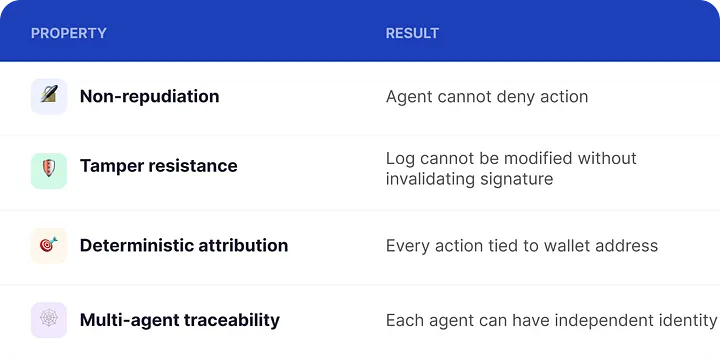
For high-trust systems (finance, healthcare, governance, enterprise automation), this is insufficient.
You need:
- Strong identity for the agent
- Cryptographic attestation of actions
- Immutable audit records
This is what WeilChain provides.
2. Identity Model: Wallet-Based Agent Identity
Every agent instance is bound to a Weil wallet.
How Identity Is Attached
In Python:

What happens internally:
- Wallet file is loaded
- Private key is initialized in memory
- Public key / address derived
- Agent instance now has cryptographic identity
All subsequent agent.audit(...) calls are signed using this key.
3. Auditing Model
Auditing is a single applet execution:
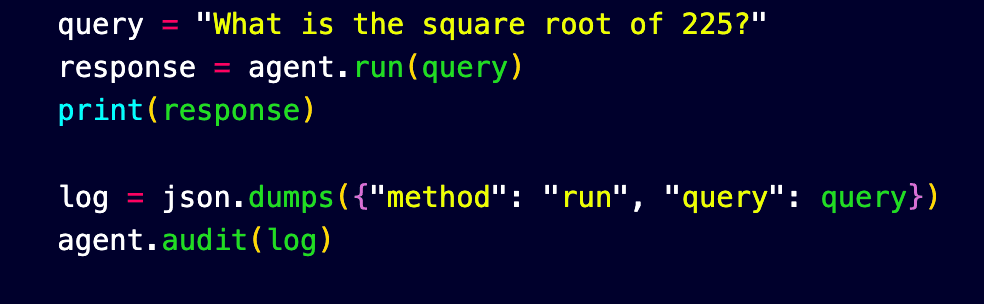
What Happens During audit()
- Serialize payload
- Hash payload
- Sign hash with private key
- Submit transaction to WeilChain
- Store:
- payload
- signature
- agent address
- timestamp
- transaction hash
The blockchain stores:
- Cryptographic commitment of the action
- Identity of signer
- Immutable timestamp
4. Example: LangChain Agent + Weil Audit
Minimal integration:
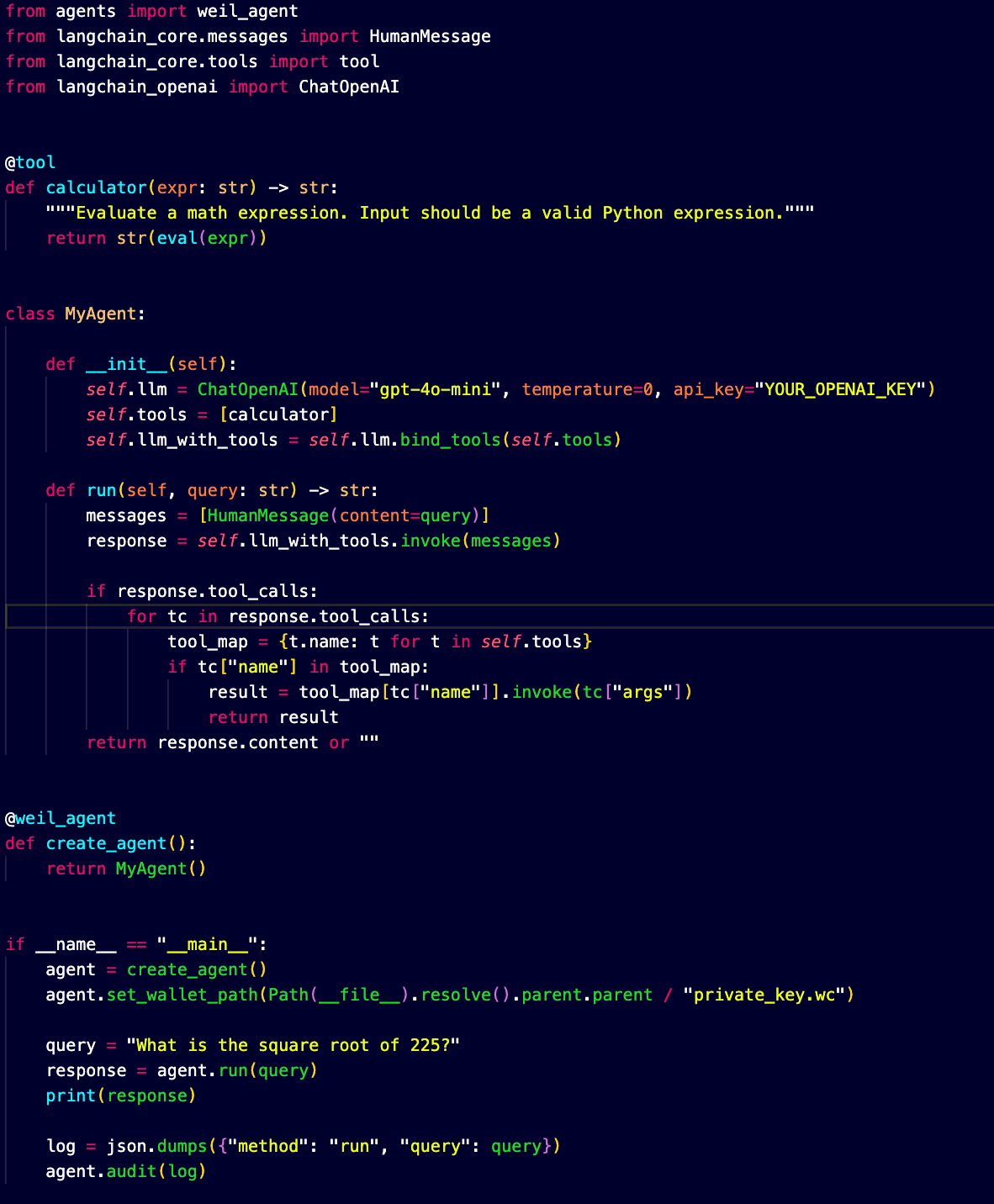
The decorator @weil_agent wraps your agent with:
- Identity support
- Wallet binding
- Audit capabilities
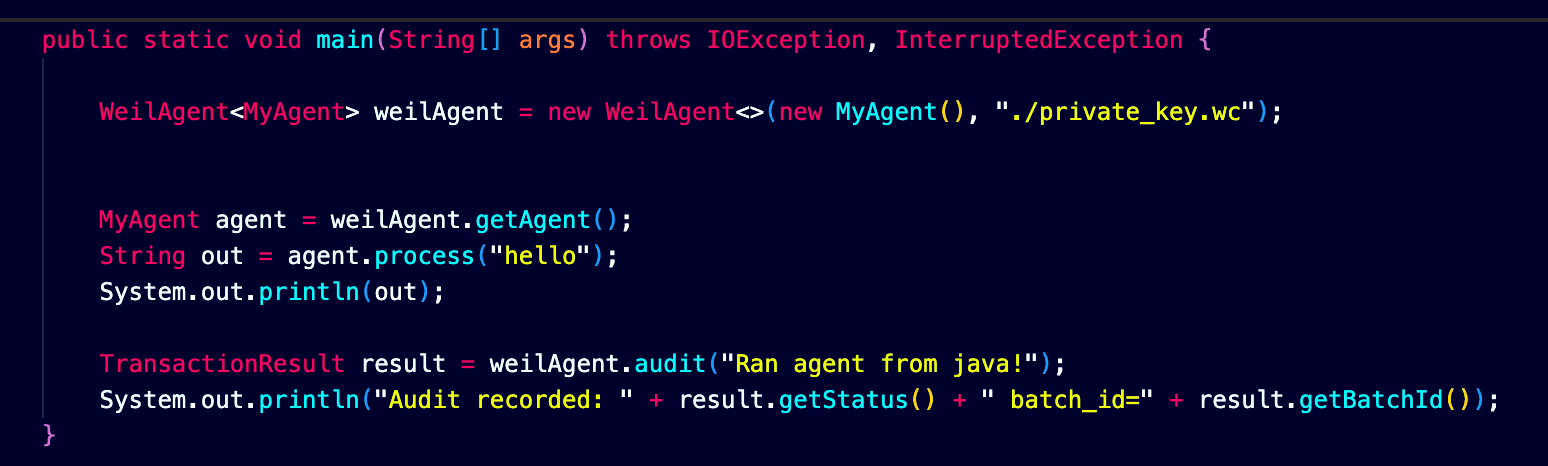
Example Java implementation:
Audit log on Block Explorer:
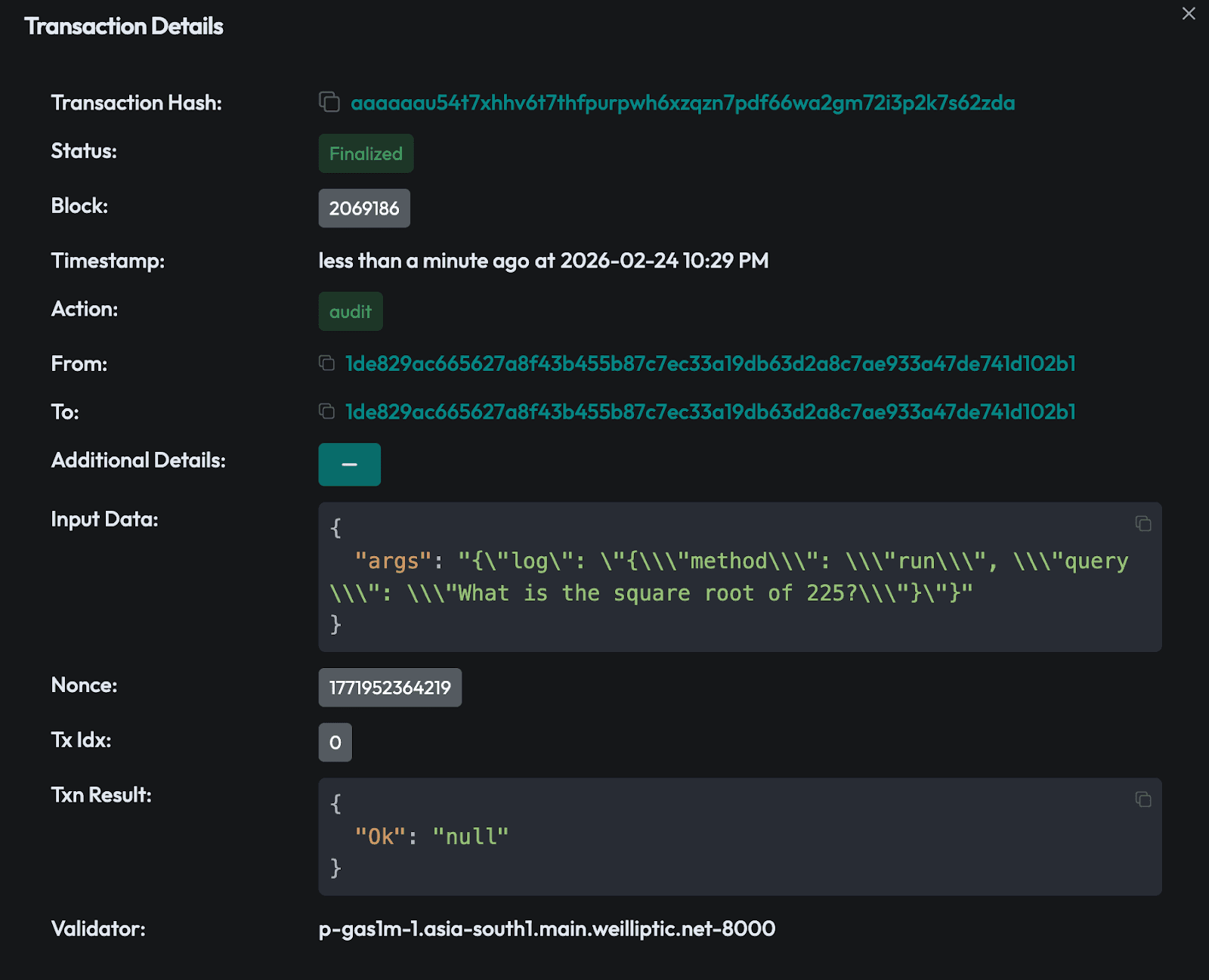
Although we are displaying the actual content in the "Receipts" for illustration purposes, in production the system records only a cryptographic commitment on the WeilChain; the underlying content can be selectively revealed and verified later during an authorized audit or forensic analysis.
Language Support
- Python
- Go
- Java
- Rust
- Node.js
Summary
WeilChain Audit SDK adds two primitives missing in current LLM systems:
- Cryptographic Agent Identity (Wallet-Based)
- Immutable, Verifiable Action Logs
Integration requires:
- Adding
@weil_agent - Setting a wallet
- Calling
agent.audit(...)
From that point forward, every AI action can produce a verifiable receipt.